
FENTENFENNA FARM CIC
OUR APPROACH
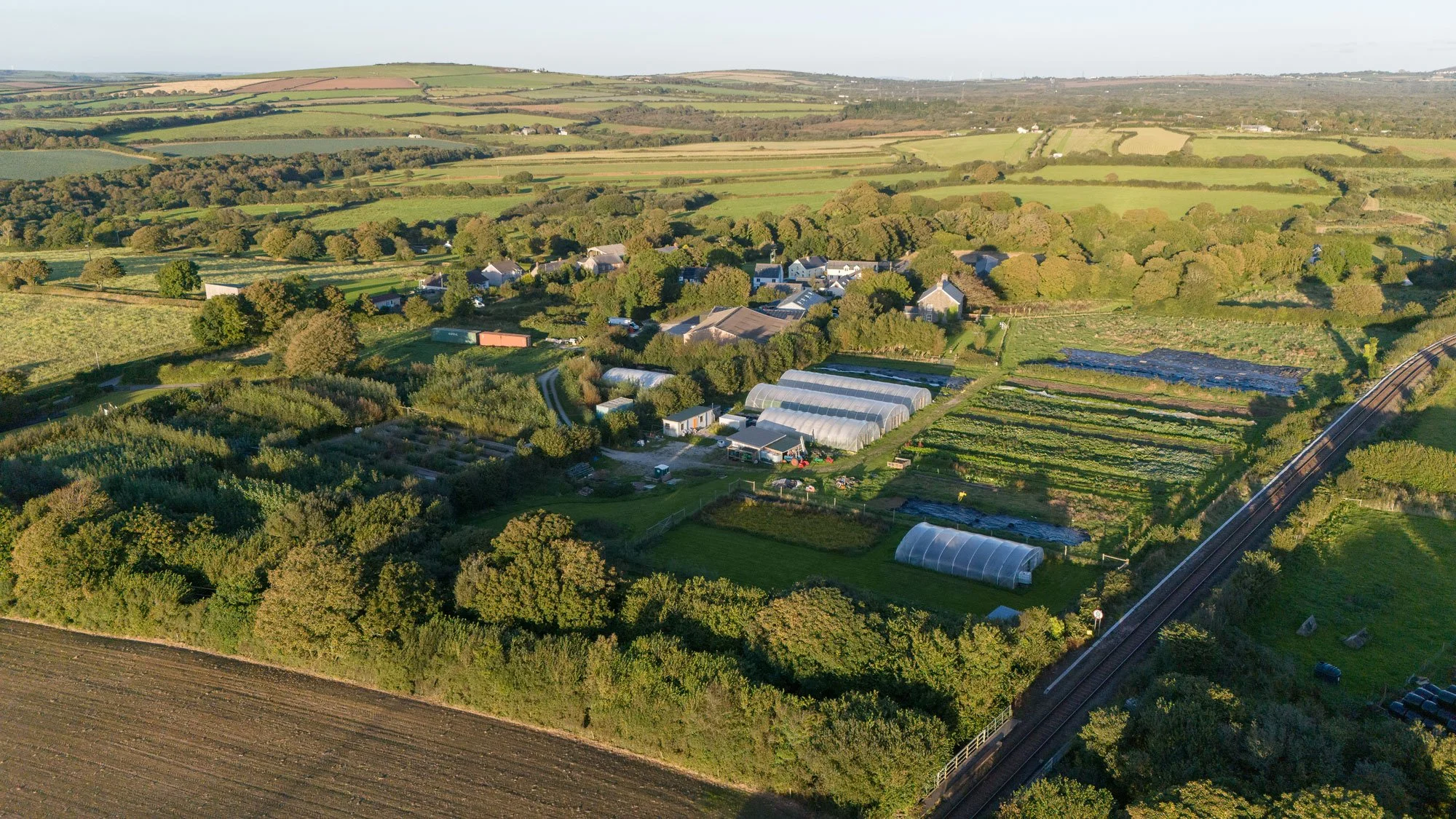
Connecting people place & purpose
For fifteen years, we have been exploring how practical, locally rooted projects can help create healthier communities, more resilient food systems and thriving rural economies.
Beginning with Newquay Orchard and continuing through Fentenfenna Farm, our approach has grown through working with people, developing places and learning from experience.
By place-based, we mean starting with the people, land, organisations and opportunities already present in a place, then building the connections that help them thrive together.
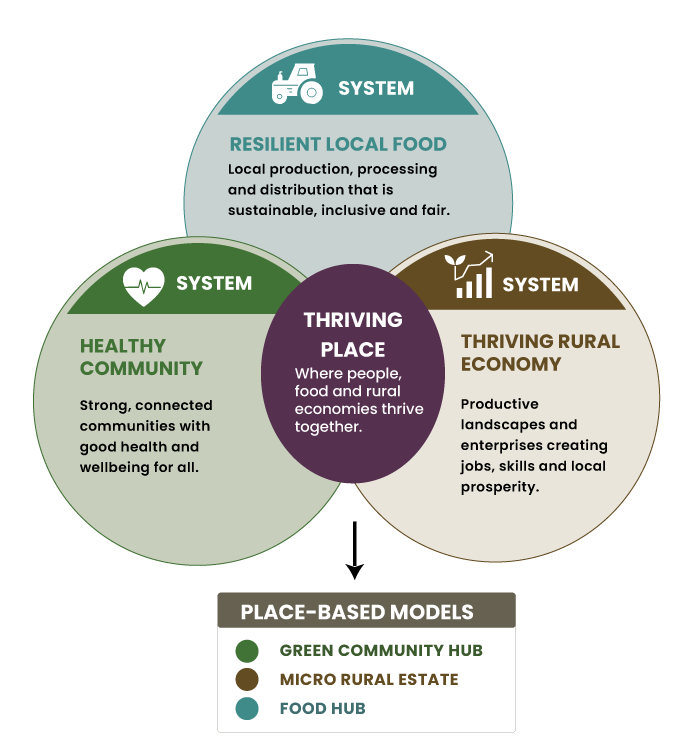
Three connected systems.
Healthy communities need opportunities to connect, learn and participate. Resilient food systems need growers, infrastructure and reliable routes to market. Thriving rural economies need space for enterprise, skills and livelihoods.
Our work brings these needs together, with care for nature running through all three.
The Place-Based Systems Series
Our five papers explain the thinking behind this work: what we are doing, what we have learned and how the models connect.
They move from practical activity at Fentenfenna Farm to an emerging framework that other places could adapt to their own circumstances.
PAPER 01
Fentenfenna Farm CIC
Where the work happens
At Fentenfenna Farm, enterprise, food, nature and community activity share the same land and infrastructure. Our Rural Enterprise Hub, Food Hub and Wasted Apple provide practical foundations for this connected approach.
This paper introduces seven workstreams spanning the Micro Rural Estate, live-work opportunities, food infrastructure, partnerships, social pathways, Wasted Apple and shared learning. It explains how existing activity and future development can reinforce one another, creating opportunities for people and enterprises while caring for the land.
PAPER 02
Green Community Hubs
How communities grow stronger
Newquay Orchard began with a simple vision: a place where people, nature and community could thrive together. Its development showed how a welcoming green space, trusted relationships and opportunities to participate can support wellbeing, learning and belonging.
This paper describes the characteristics of a Green Community Hub, from food growing and volunteering to partnerships and community enterprise. With Newquay Orchard now under a new generation of leadership, the learning offers a starting point for other communities to develop hubs shaped by their own needs.
PAPER 03
The Micro Rural Estate
How rural places can thrive
A Micro Rural Estate brings land, shared infrastructure, enterprise and community together under long-term stewardship. It creates space for rural businesses, food production, nature recovery and learning, with homes and live-work opportunities forming part of the wider model.
This paper explains the components and public value the model aims to deliver. Fentenfenna Farm is its working demonstration, with further development still to come. The ambition is to help other holdings adopt the principles while adapting them to their own people, landscape and opportunities.
PAPER 04
The Food Hub Pilot
Connecting the local food system
Our established food recovery and redistribution work provides a foundation for the next stage: a collaborative Food Hub pilot for Mid-Cornwall. The pilot aims to connect growers, producers, community food organisations and markets through better use of shared infrastructure and coordinated logistics.
This paper sets out the consultation findings and proposed approach. Fentenfenna provides facilities and support; governance, staffing and delivery arrangements will be developed with partners. The aim is to strengthen growers’ routes to market, improve access to good food and complement existing community food provision.

PAPER 05
The Bigger Picture
How the models connect
Green Community Hubs build relationships and opportunities for participation. Micro Rural Estates provide land, infrastructure and space for enterprise. Food Hubs connect production, distribution and community food access. Together, these models offer a practical way to strengthen the systems that support a thriving place.
This paper brings the journey together and describes the emerging framework. It shows how community organisations, growers, businesses, educators, environmental partners and public bodies can contribute through different roles. Learning from the Mid-Cornwall pilot will help test and refine how that framework works in practice.
Learning that other places can use.
Our approach continues to develop through delivery, evidence and collaboration. By sharing what works and what needs to improve, we want to help other communities and rural places build on this learning in ways that fit their own circumstances.
Work with us
If you are a community organisation, grower, rural enterprise, researcher, landowner, funder or public body interested in this approach, we would welcome a conversation about how we could work together.